History
Oliwa in old postcards
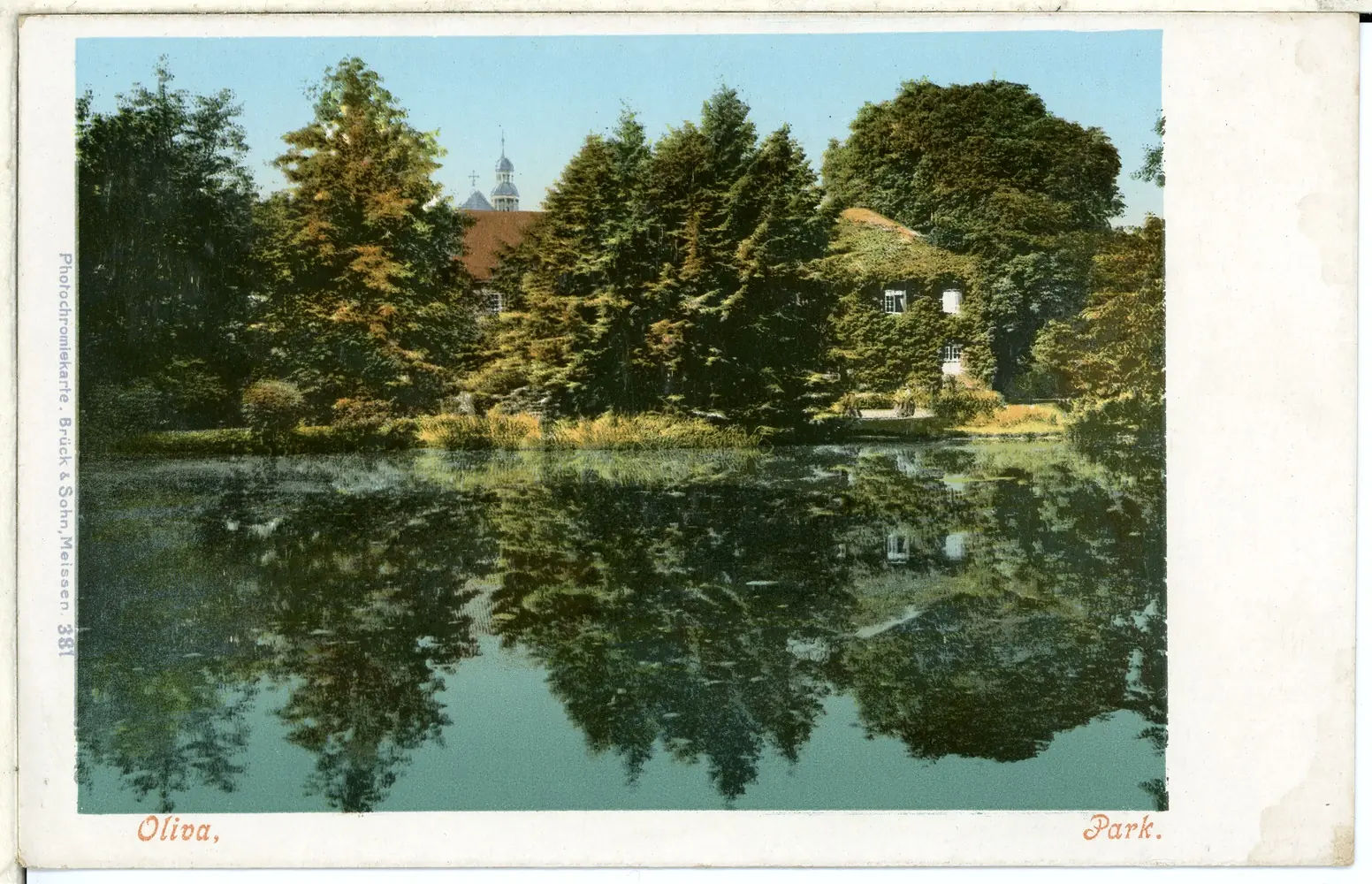
Eighteen postcards of Oliwa from 1898–1916. They show the neighbourhood before it became part of Gdańsk: the monastery church, the Abbots' Palace, Pachołek hill — then called Karlsberg — the Leśny Młyn on the stream, and the park.
Every card is in the public domain. The German captions printed on them (Klosterkirche, Schloss, Karlsberg, Strauchmühle) are pre-1945 names; under each card we give the publisher, the year and the Polish name used today.
Where the cards come from
Postcards of Oliwa were printed in quantity from the late 19th century, when the village was a fashionable resort outside Gdańsk — several cards carry the word „Luftkurort”. Publishers in Dresden, Meissen, Leipzig and Berlin commissioned photographs from local studios and sold them in numbered series. Most of our scans come from the Zeno Ansichtskarten collection; eight are from the Brück & Sohn archive in Meissen, released under CC0.
That set of free Oliwa scans is finite: thirteen Zeno cards and eight Brück & Sohn cards. We left two out because they are the same photographs as cards already in the gallery.
Oliwa before 1926
Until 1 July 1926 Oliwa was a separate municipality, first in Prussia and then in the Free City of Gdańsk. What the cards show is a place in the middle of becoming a Gdańsk district: a settlement strung along a stream, the monastery and its church at the centre, villas and guesthouses on the slopes. They also show why people came, and what still works today — the axis of the park from palace to pond, the hill with the panorama, the dark valley with its mills.
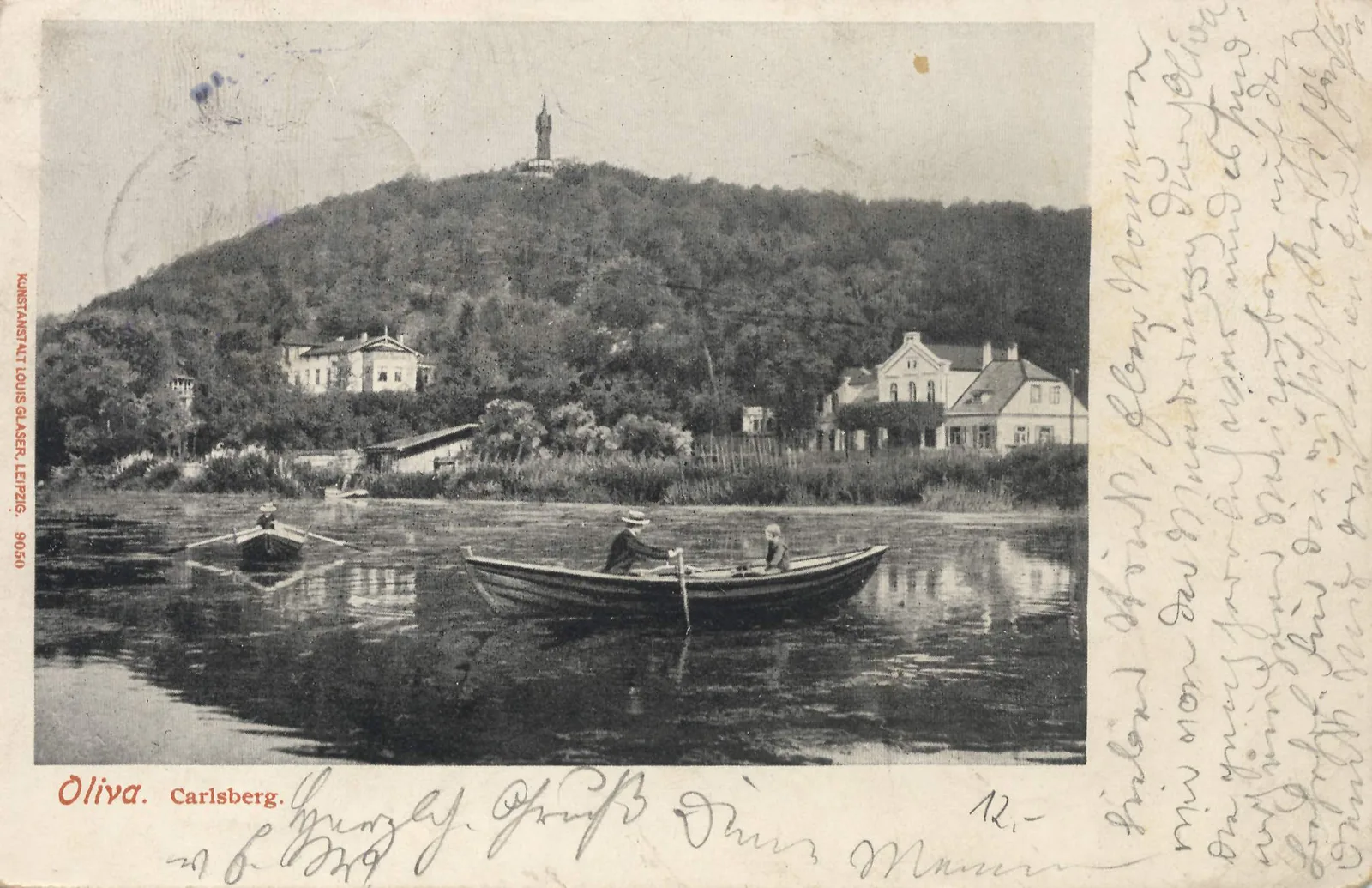
Watch the names: Pachołek appears as Karlsberg, Leśny Młyn as Strauchmühle. The same building can be labelled in German on one card and in Polish in a post-war guidebook, so the captions here are Polish with the German original explained.
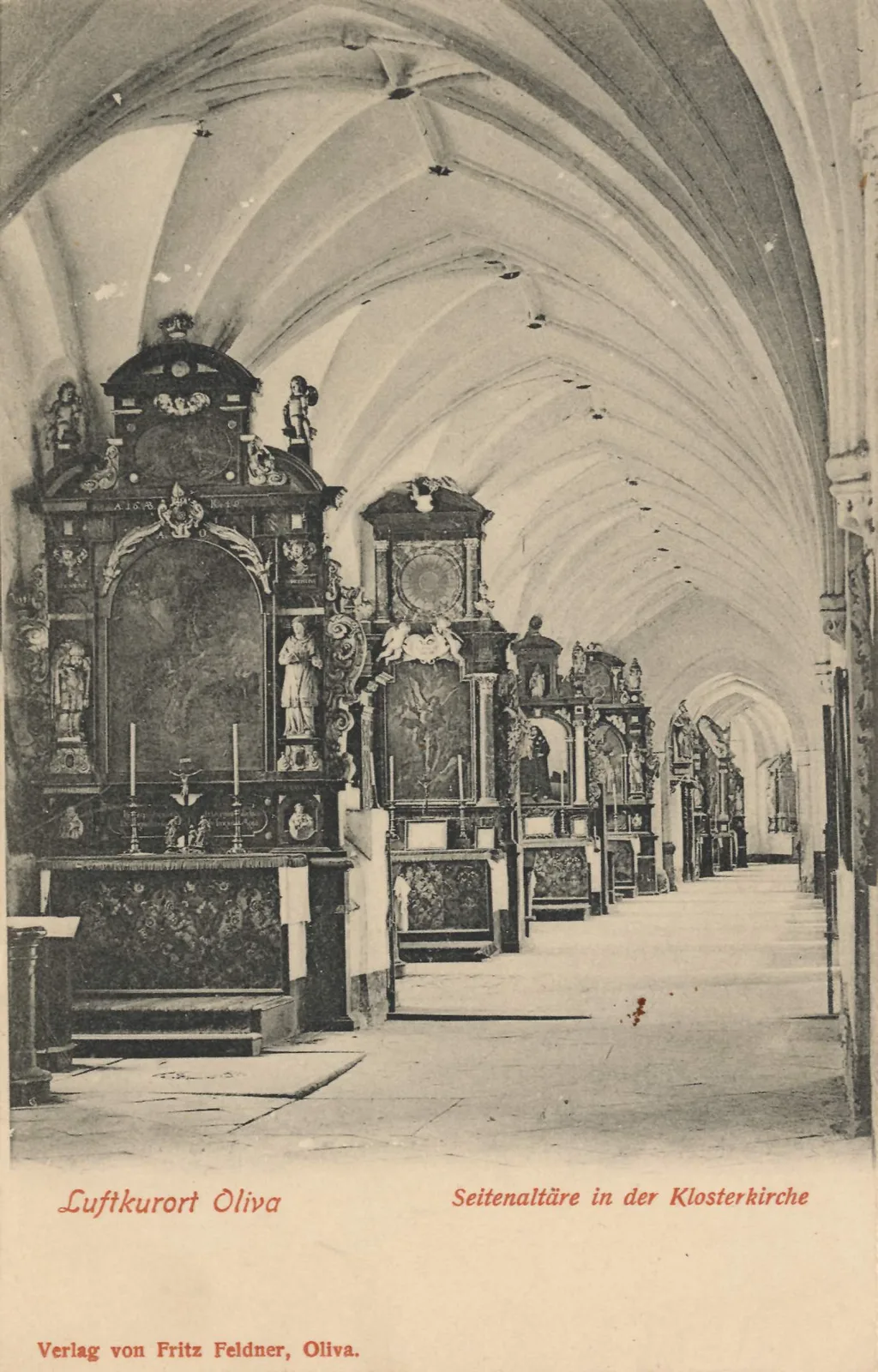
The monastery church and its organ
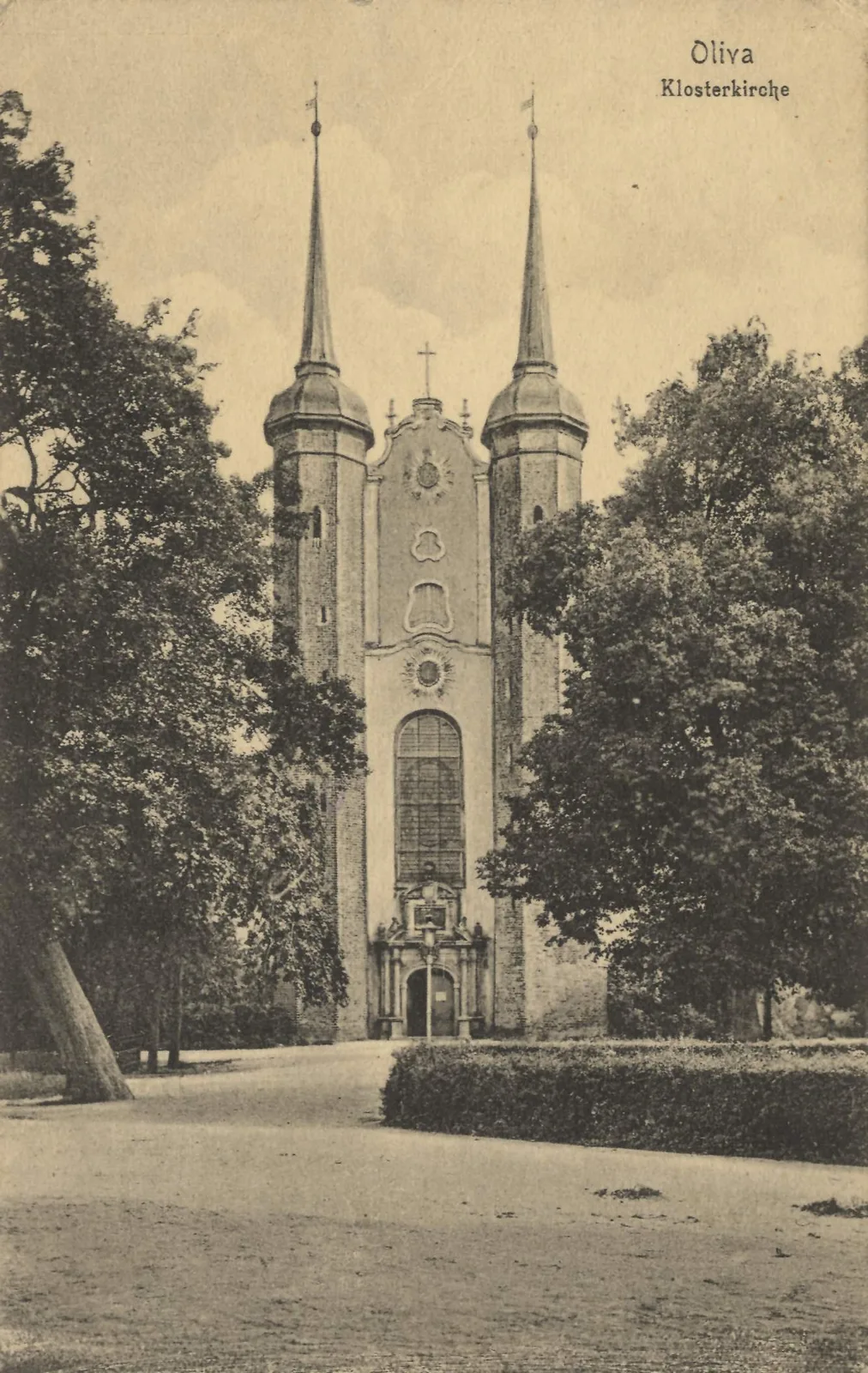
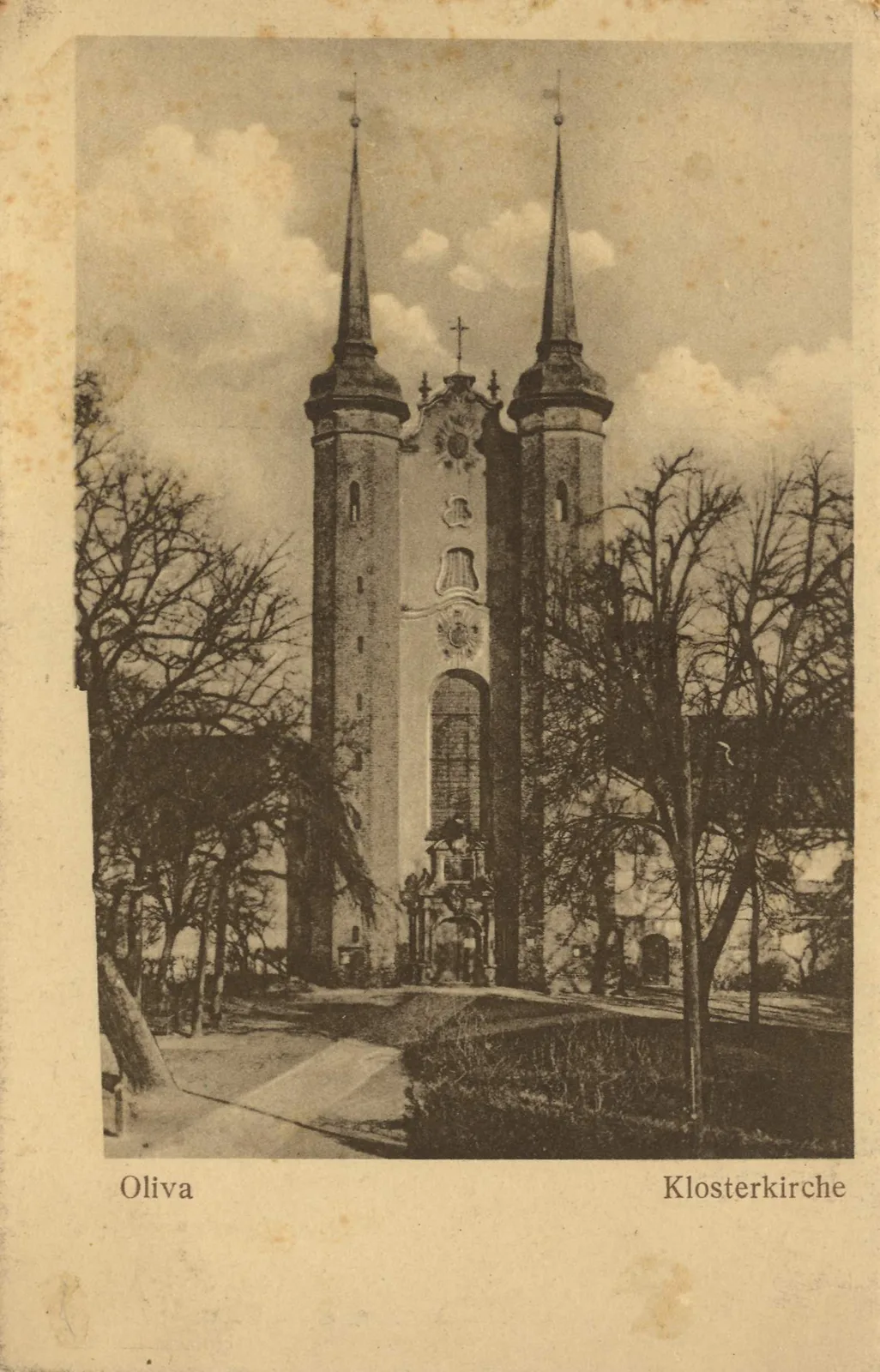
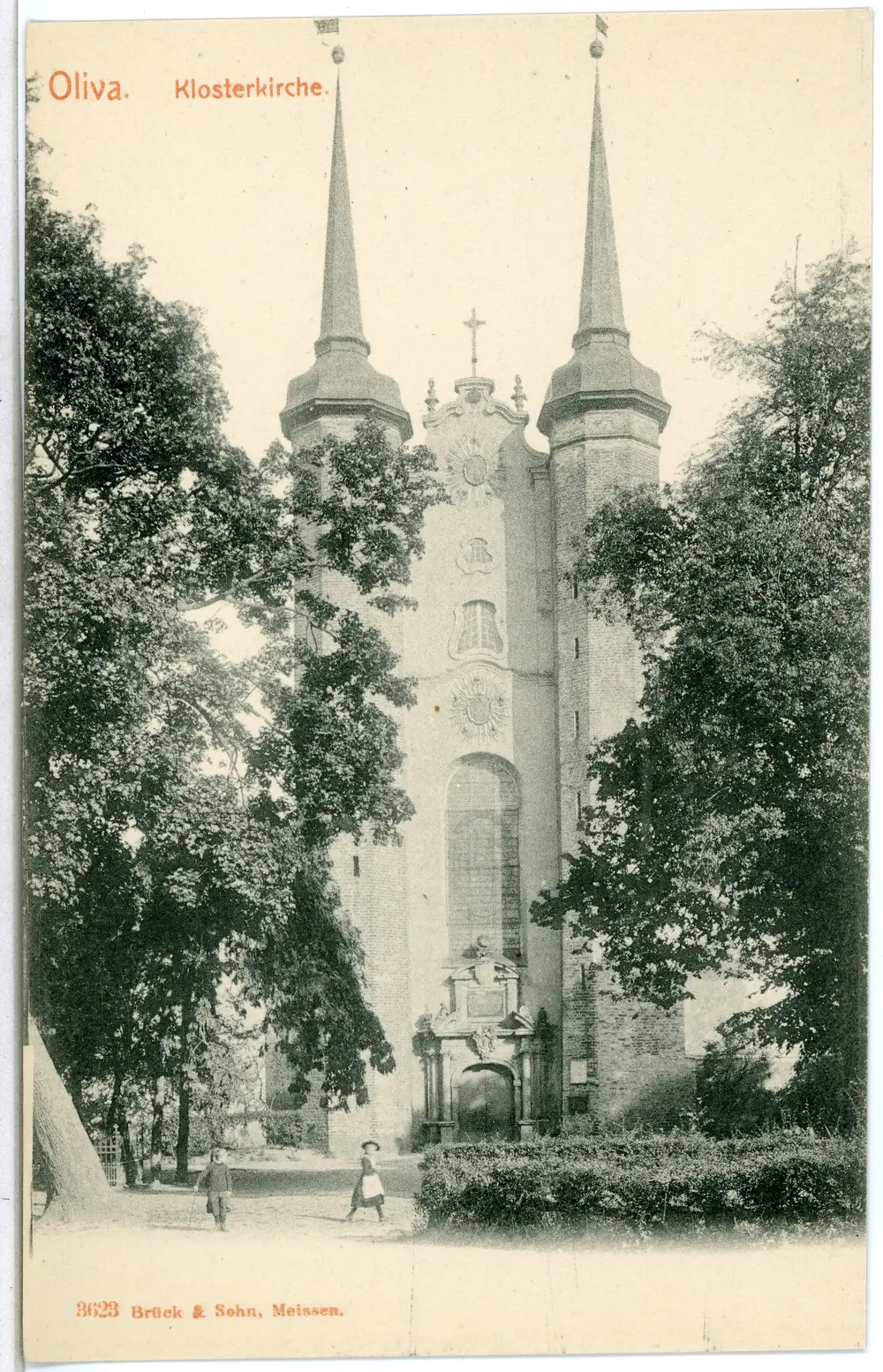
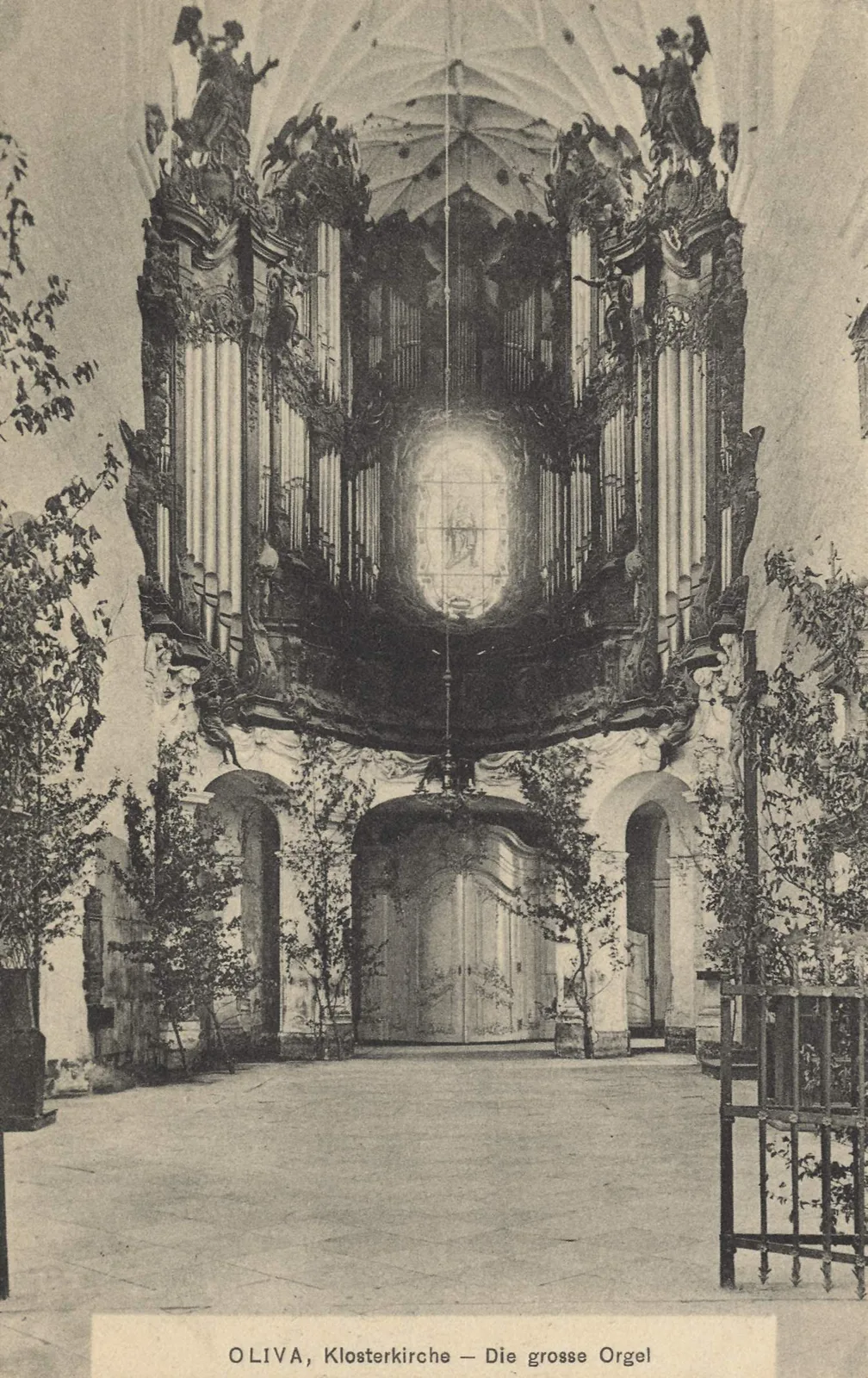
The former Cistercian church, today the cathedral, in cards from around 1900 and from 1903.
The Abbots' Palace and its gardens
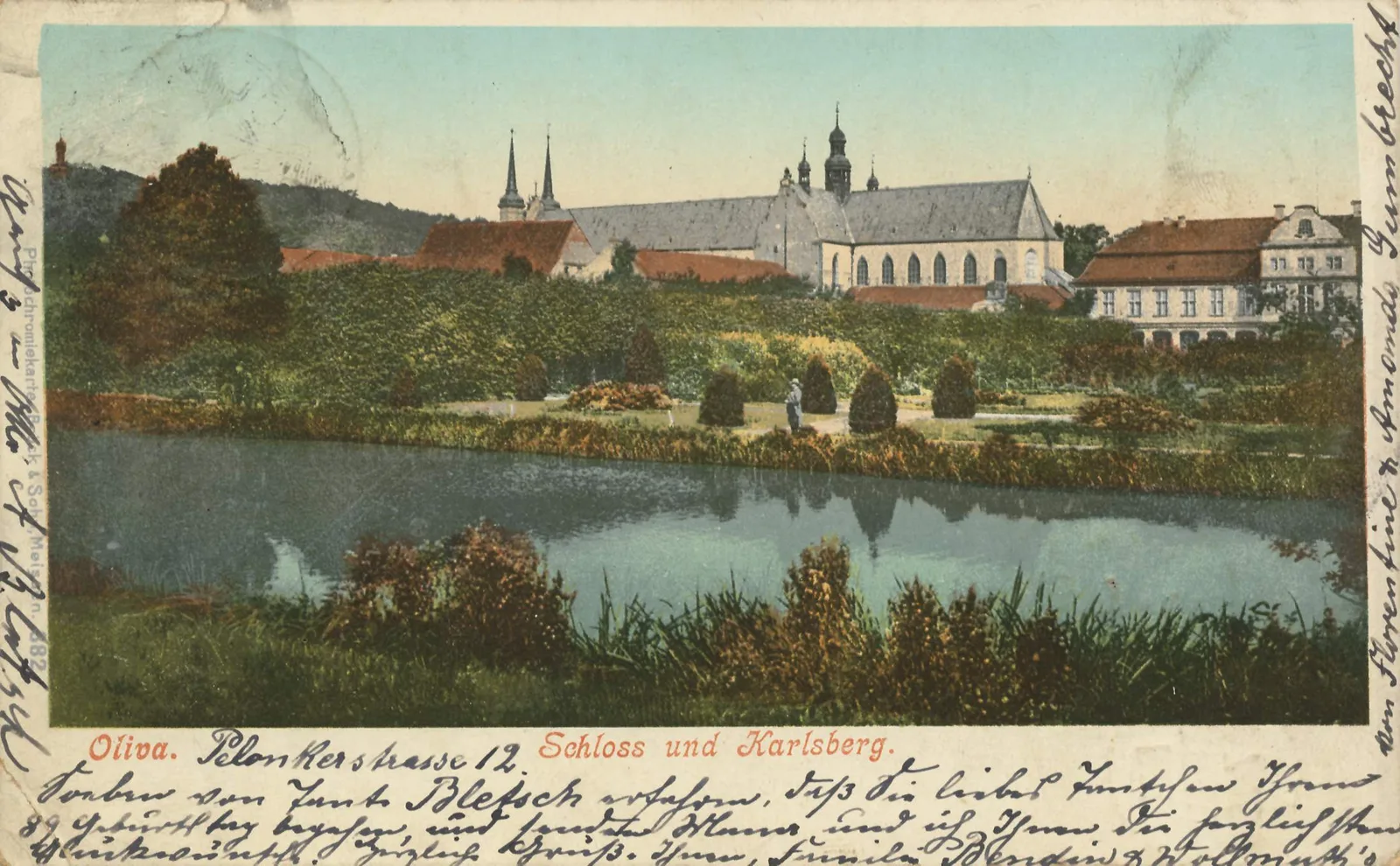
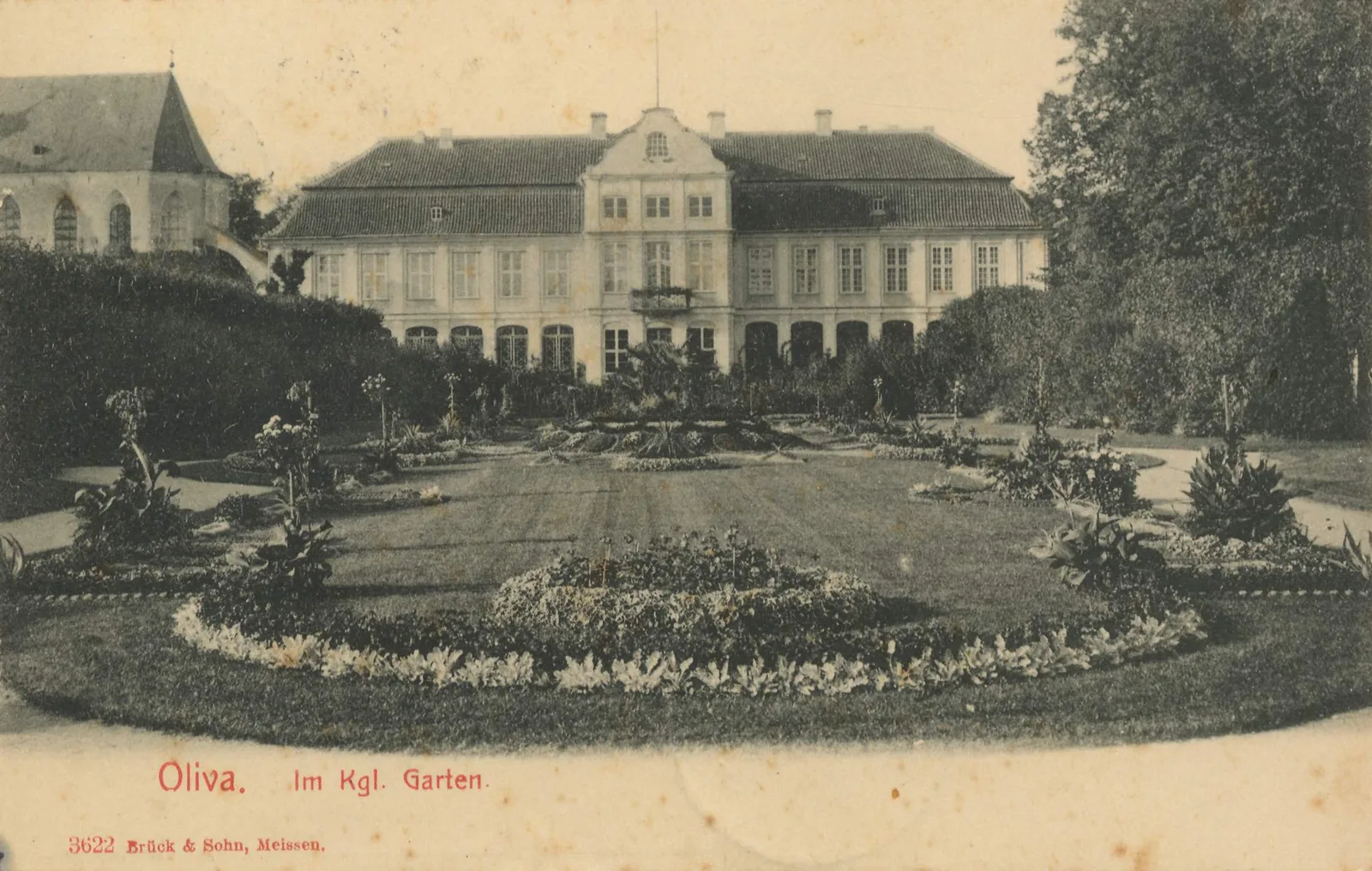
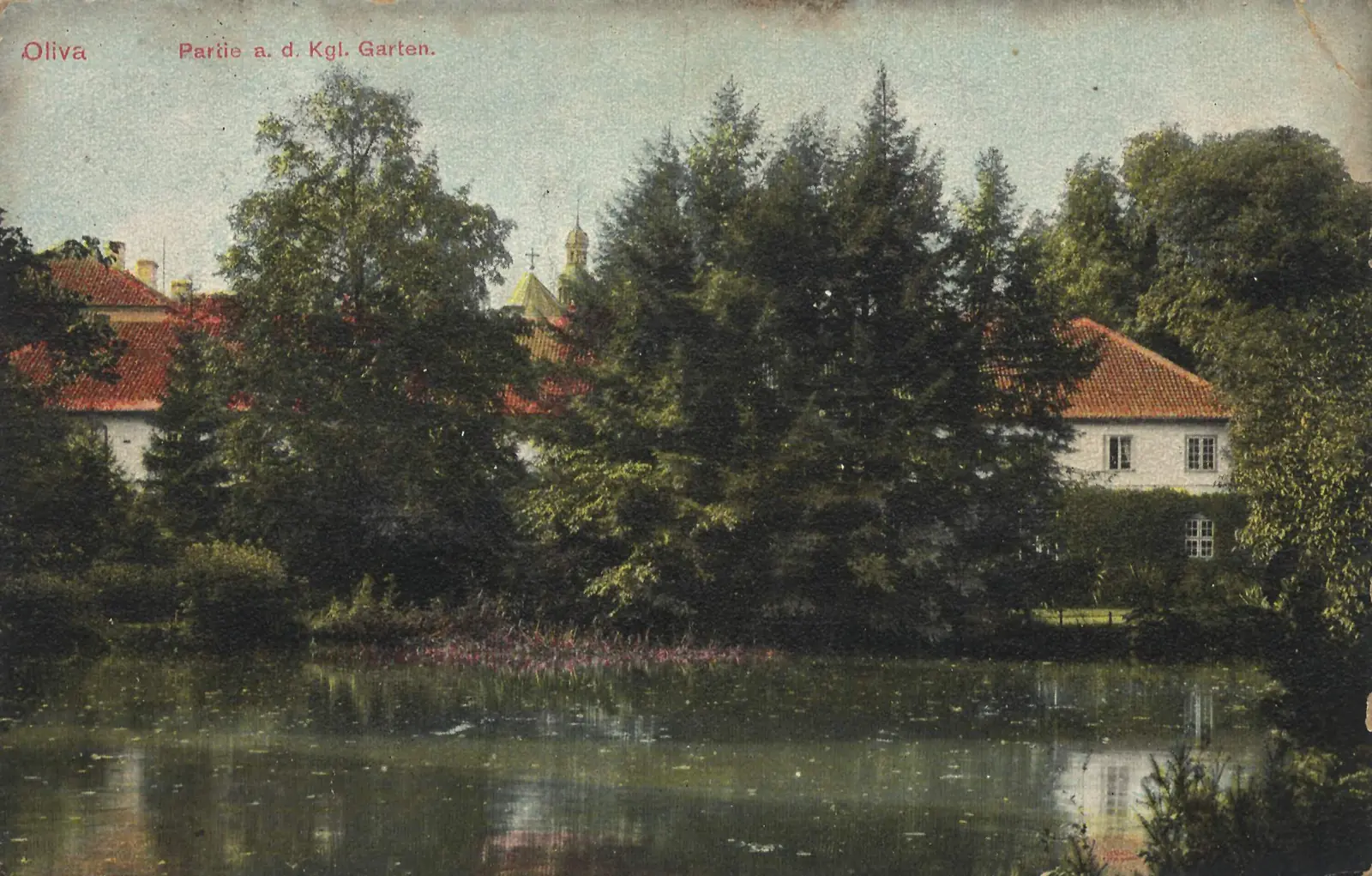
The palace, the royal garden and the park pond, from before Oliwa was absorbed into Gdańsk.
Pachołek, then called Karlsberg
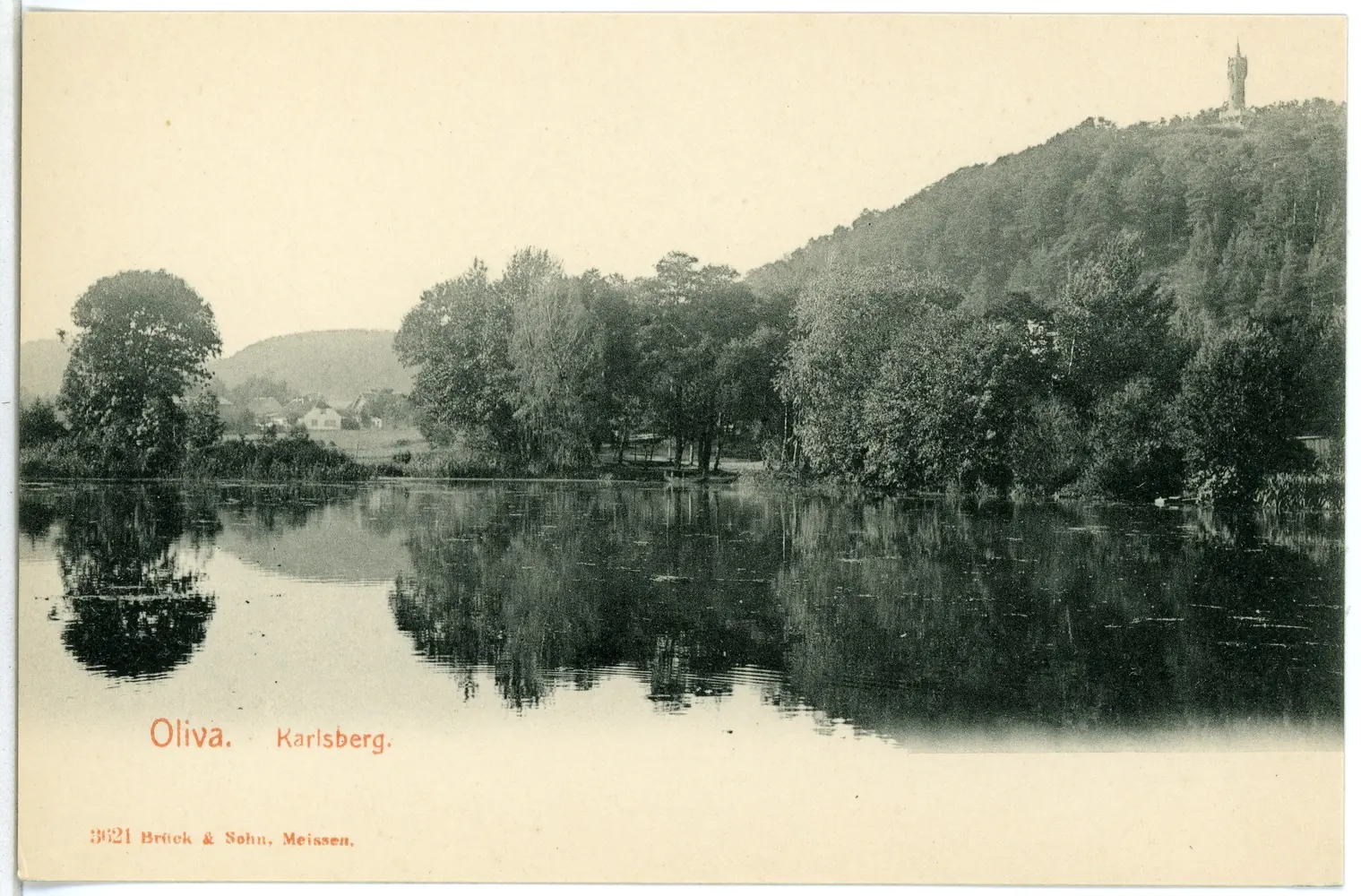
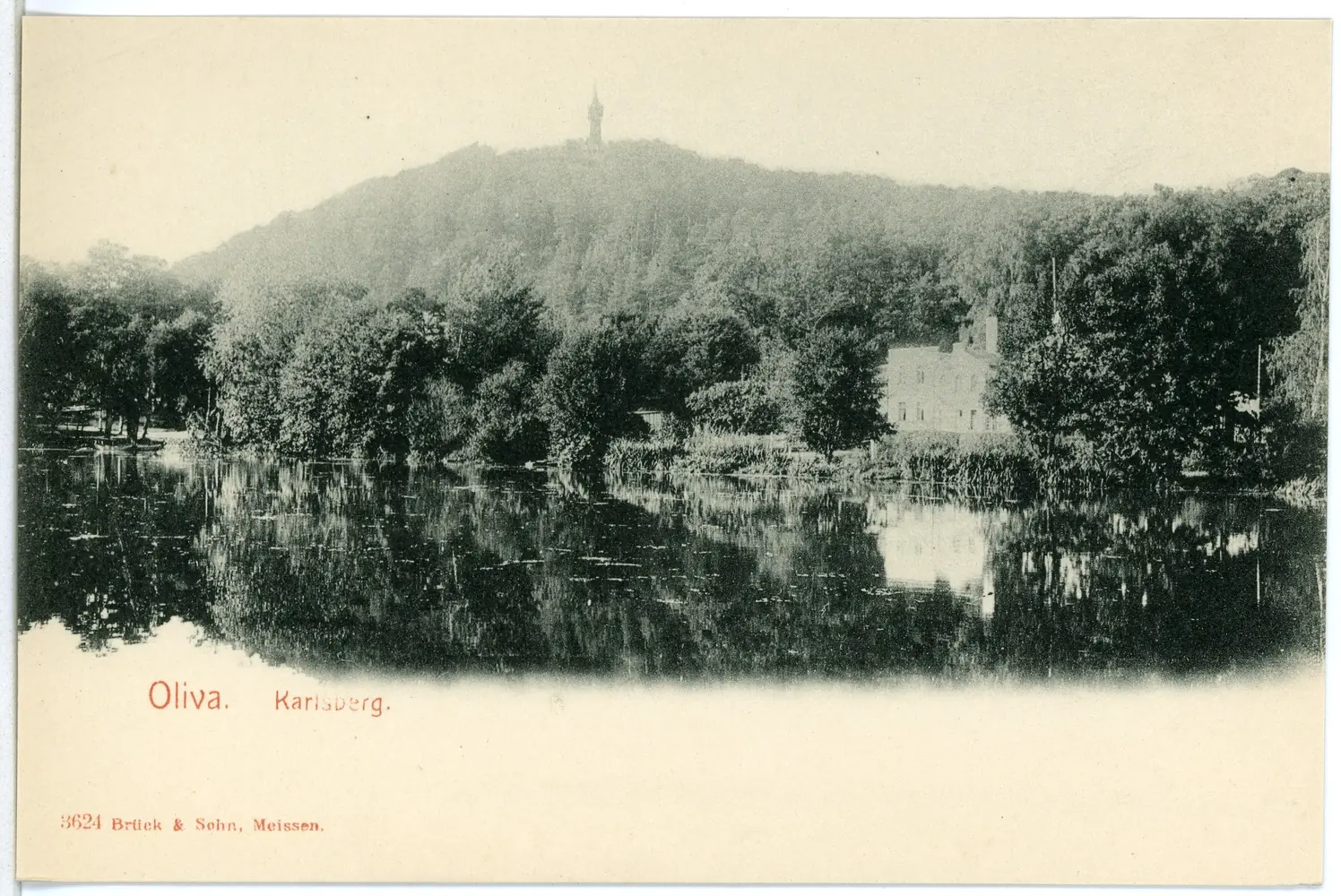
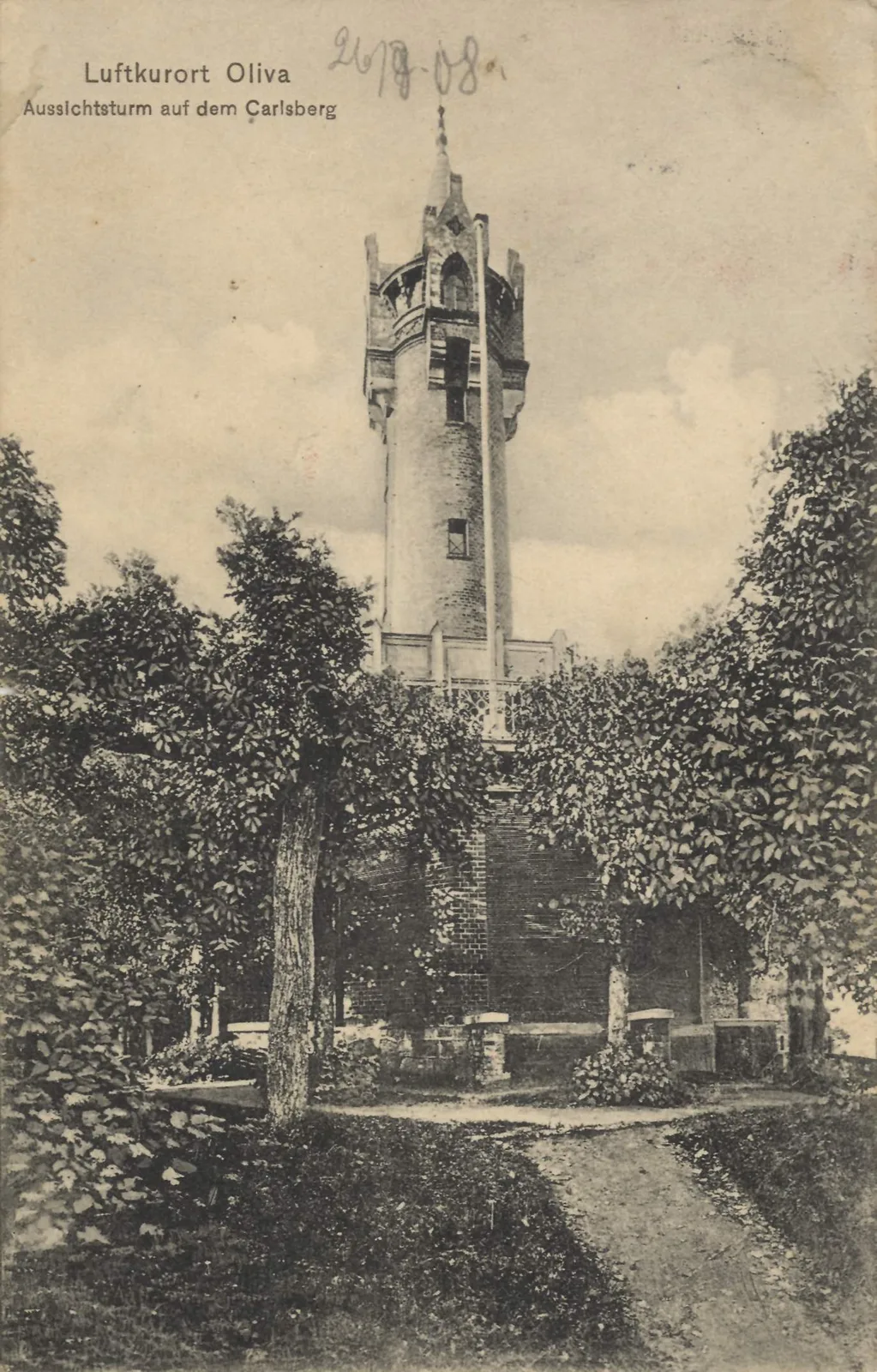
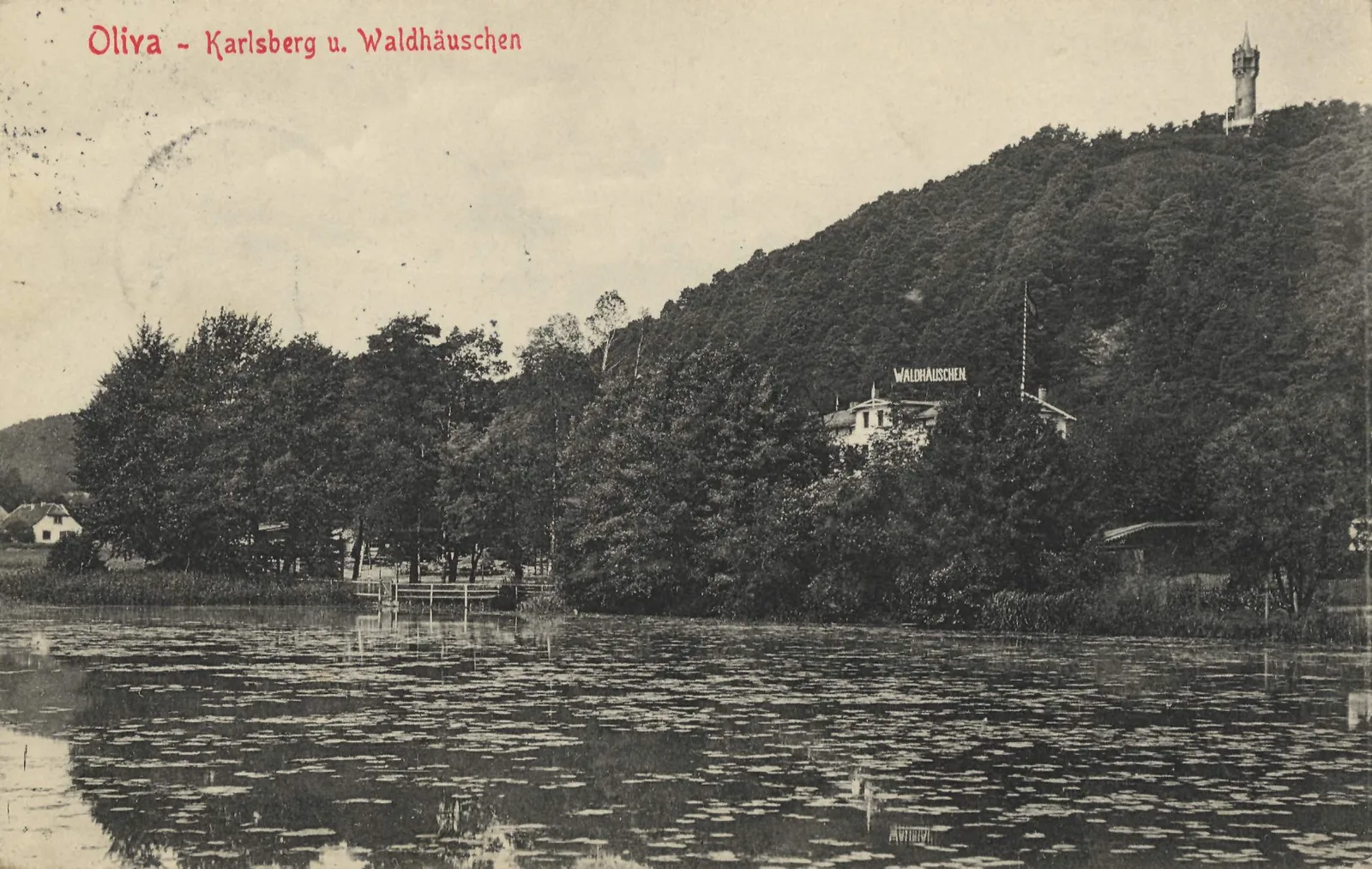
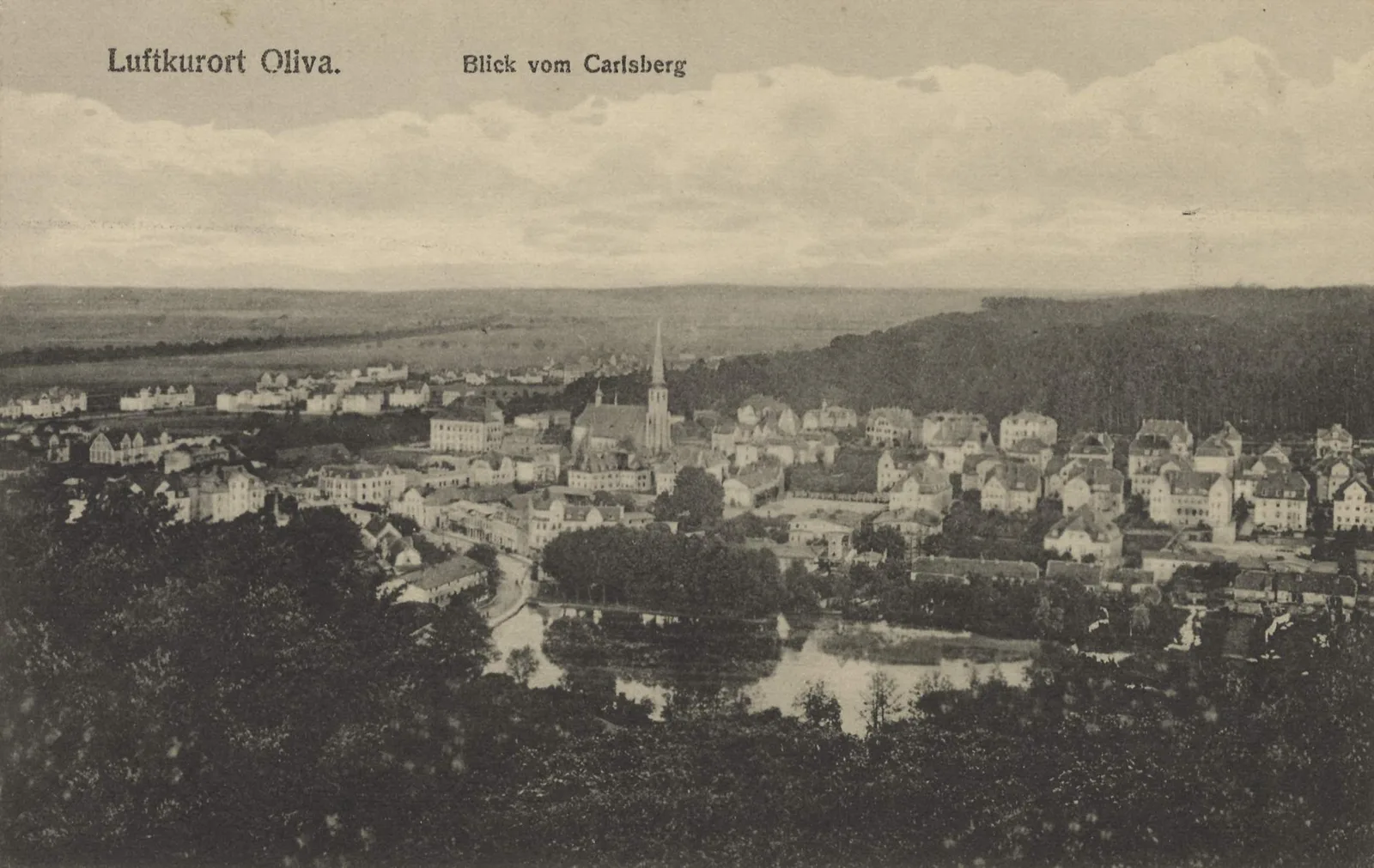
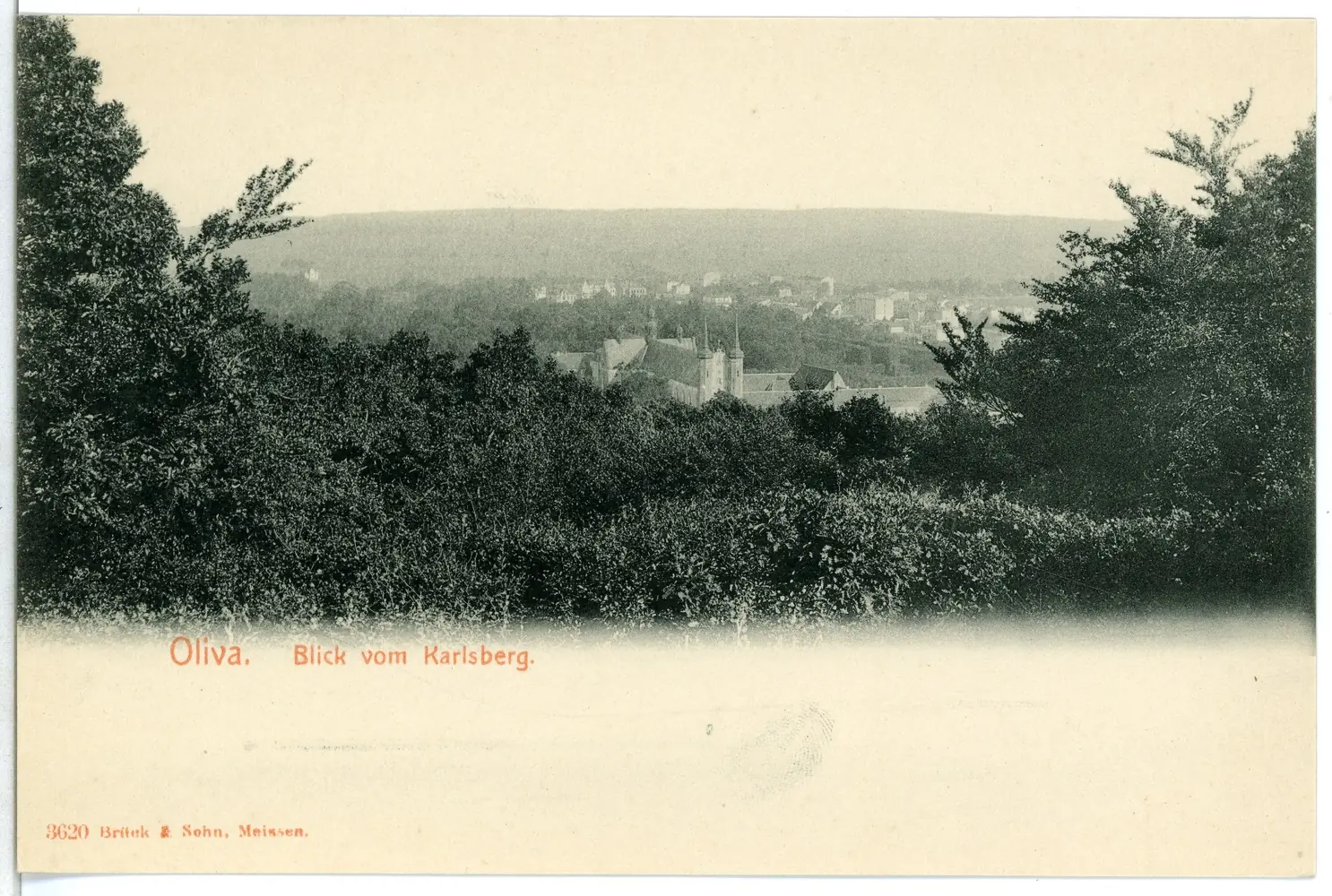
The hill with its viewing tower, and panoramas of Oliwa taken from its slope.
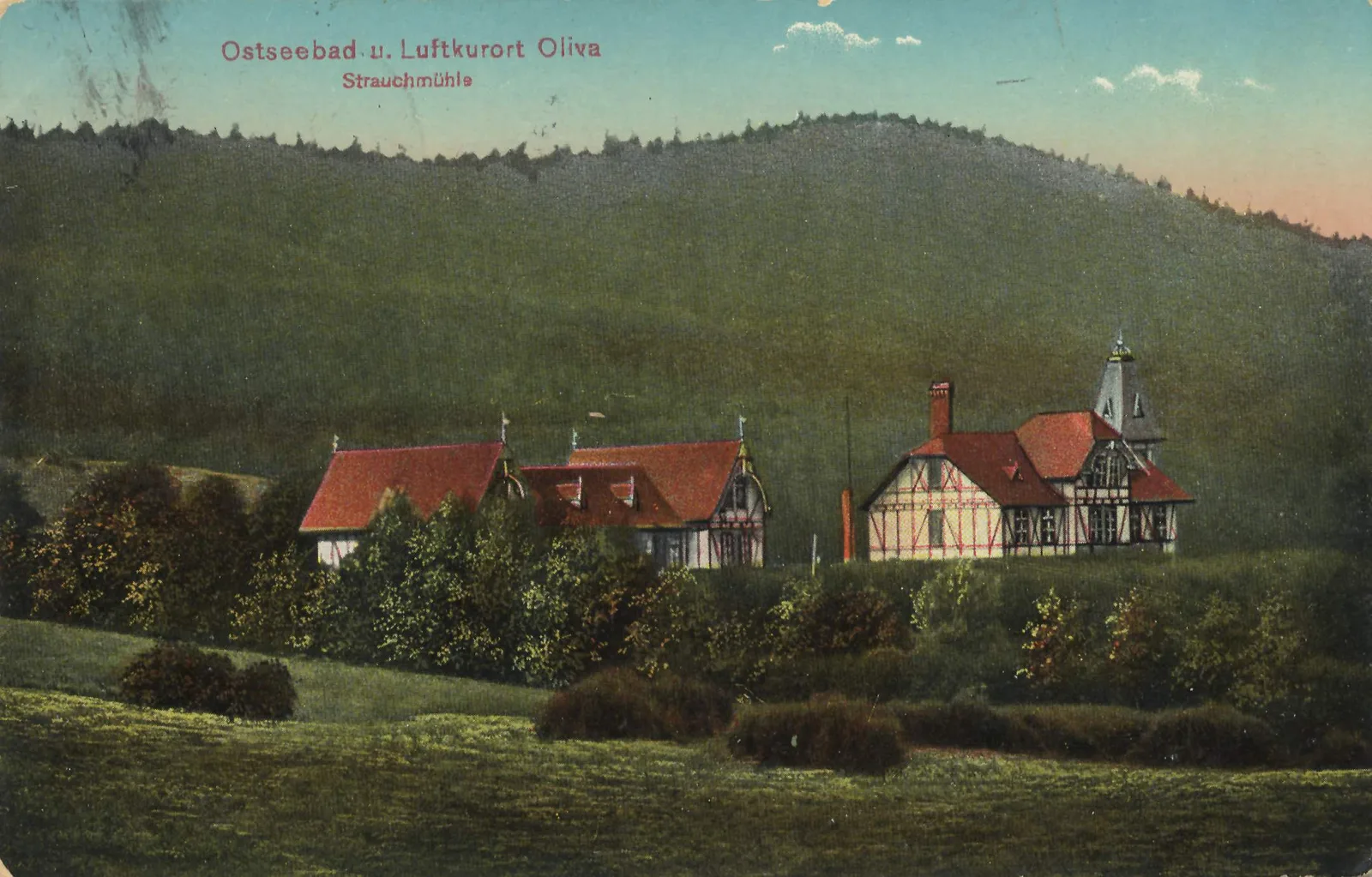
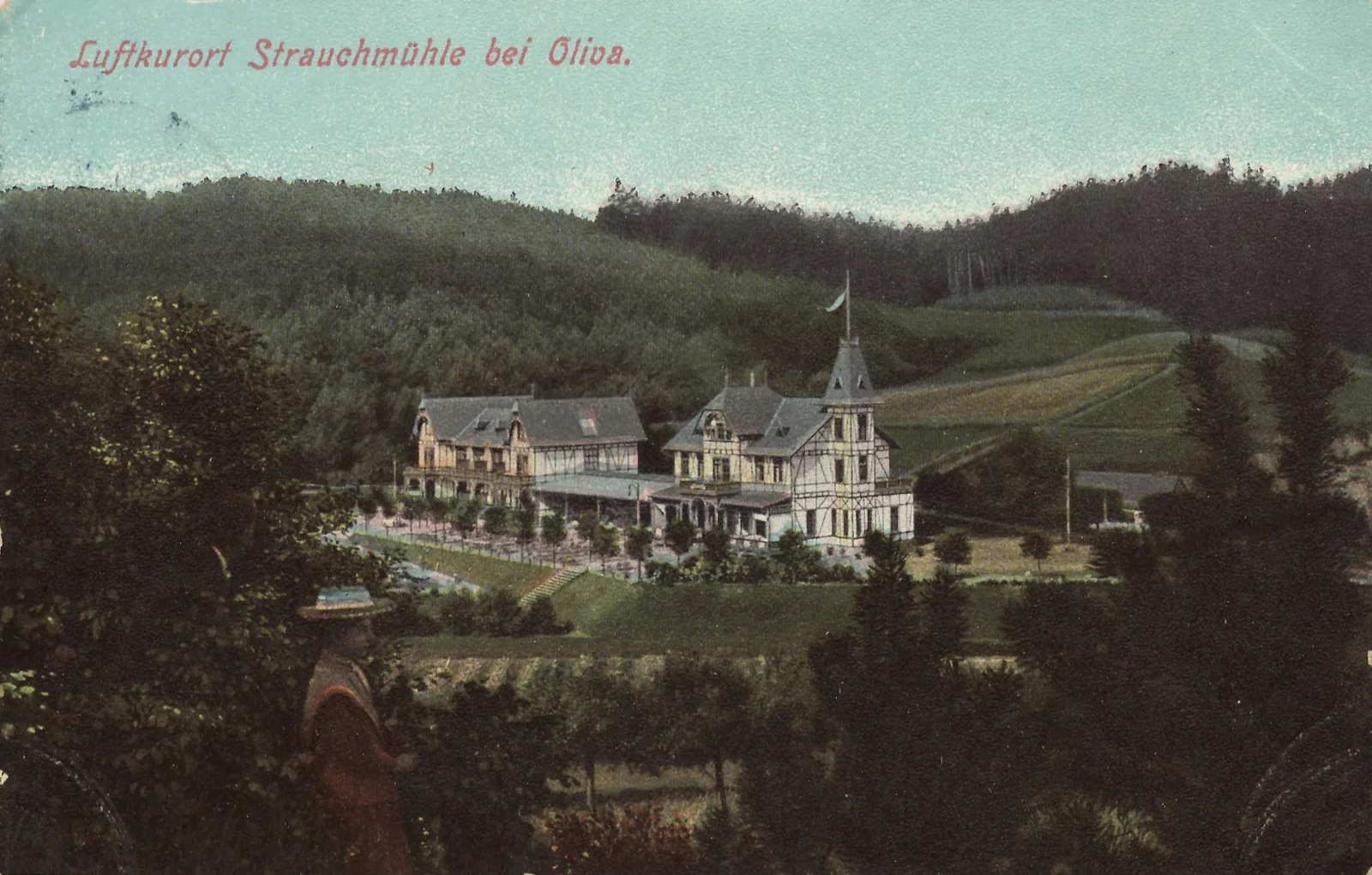
Leśny Młyn on the stream
The mill on the Oliwa Stream, in the valley we now call the Valley of Joy.
What is still there
Most of these views can be repeated today. The monastery church still stands on the same spot with its two towers and the organ built between 1763 and 1788 — the same instrument publishers sold as a picture of its own. The Abbots' Palace and the French garden above the pond also match, though the palace has been restored and now holds a museum. For visiting details see Oliwa Cathedral and its organ.
The tower on Pachołek is the exception. The brick tower in the cards of 1902–1908 was blown up by German sappers on 23 March 1945; a 15-metre steel structure has stood on the summit since 1975, with the whole district, the coast and the bay in view. The wooded valley below, with the Valley of Joy and the Water Forge, is on the two-hour walk through old Oliwa.
Leśny Młyn on the cards is a ruin in the Valley of Joy today, not a working mill, but the stream, the pond and the slopes look much the same. For the green around the palace see Oliwa Park, and for the buildings that frame these cards, a weekend in Oliwa.
Sources and licences for every card (Wikimedia Commons)
- Postcard, c. 1900: the former Cistercian church in Oliwa seen from the entrance. Photo: Stengel & Co., Public domain, Wikimedia Commons
- Postcard, c. 1900: façade of the monastery church in Oliwa. Photo: Danziger Verlags-Gesellschaft, Public domain, Wikimedia Commons
- Postcard, 1903: the twin-towered façade of the Oliwa monastery church. Photo: Brück & Sohn Kunstverlag, CC0, Wikimedia Commons
- Postcard, c. 1900: the great Oliwa organ case. Photo: Clara Bernthel, Public domain, Wikimedia Commons
- Postcard, c. 1900: side altars in the Oliwa monastery church. Photo: Fritz Feldner, Public domain, Wikimedia Commons
- Postcard, 1899: the Abbots' Palace in Oliwa with Pachołek hill behind. Photo: Brück & Sohn, Public domain, Wikimedia Commons
- Postcard, 1908: the garden by the Abbots' Palace, then the Royal Garden. Photo: Brück & Sohn, Public domain, Wikimedia Commons
- Postcard, 1915: the Royal Garden by the Abbots' Palace in Oliwa. Photo: Schaar & Dathe, Public domain, Wikimedia Commons
- Postcard, 1898: the pond in Oliwa Park with the monastery buildings reflected in the water. Photo: Brück & Sohn Kunstverlag, CC0, Wikimedia Commons
- Postcard, 1902: Pachołek hill, then known as Karlsberg, near Oliwa. Photo: Louis Glaser, Public domain, Wikimedia Commons
- Postcard, 1903: Pachołek hill with its viewing tower above a pond. Photo: Brück & Sohn Kunstverlag, CC0, Wikimedia Commons
- Postcard, 1903: Pachołek hill and its viewing tower seen across the pond. Photo: Brück & Sohn Kunstverlag, CC0, Wikimedia Commons
- Postcard, 1908: the viewing tower on Pachołek hill in Oliwa. Photo: Clara Bernthal, Public domain, Wikimedia Commons
- Postcard, 1916: Pachołek hill with the forest cottage near Oliwa. Photo: Stengel & Co., Public domain, Wikimedia Commons
- Postcard, c. 1900: panorama of Oliwa seen from Pachołek hill. Photo: Clara Bernthal, Public domain, Wikimedia Commons
- Postcard, 1903: view of Oliwa from Pachołek hill. Photo: Brück & Sohn Kunstverlag, CC0, Wikimedia Commons
- Postcard, c. 1900: Leśny Młyn (Strauchmühle) on the Oliwa Stream. Photo: Julius Simonsen, Public domain, Wikimedia Commons
- Postcard, 1911: the Leśny Młyn (Strauchmühle) buildings in the Oliwa stream valley. Photo: B. Charles Lehnmann, Public domain, Wikimedia Commons


